Le magazine et marché mondial pour les passionnés de voitures classiques, par des passionnés.
Le magazine et marché mondial pour les passionnés de voitures classiques, par des passionnés.


Faites votre choix:
- Voir les voitures
-
Marque >>
-
Année >>
-
-
Catégorie >>
- Voir les motos
-
Année >>
-
- Voir les pièces et plus
-
Marque de la voiture >>
-
Constructeur >>
-
Catégorie >>
-
Pays



Les annonces; à vendre toutes voitures classique
Aperçu d’annonces associées à cette annonce Lancia Aprilia
-

1974 Lancia Stratos HF Stradale | Amelia Island Auctions | Gooding & Co | March 2-3, 2023
The story of Lancia’s most memorable postwar sports car begins at the 1970 Torino Motor Show, where Carrozzeria Bertone unveiled the dramatic new Stratos Zero concept. With its bold wedge shape, futuristic front-hinged door, and mid-mounted Fulvia powerplant, Bertone’s prototype was the star of the show and attracted the interest of Lancia direc..1974LanciaStratos HF StradaleVENDU -
1964 Lancia Flavia 1.8 Coupe | Amelia Island Auctions | Gooding & Co | March 2-3, 2023
Introduced to the world at the Torino Motor Show in 1960, the Flavia was the first new Lancia developed under technical director Ing. Prof. Antonio Fessia. Representing a bold new direction in engineering philosophy, the Flavia utilized a flat four-cylinder engine, front-wheel drive, and four-wheel disc brakes – all technically advanced features..1964LanciaFlavia 1.8 CoupeVENDU -
1949 Alfa Romeo 6C 2500 Super Sport Cabriolet | Amelia Island Auctions | Gooding & Co | March 2-3, 2023
The 6C 2500, introduced in 1938, was the final Alfa Romeo model powered by a Vittorio Jano-designed engine. Jano’s six- and eight-cylinder engines, some of the most revered in the automotive world, powered Alfa Romeo’s finest offerings before and after WWII. At the top of the 6C 2500 range was the Super Sport model, or SS, which benefited from a..1949Alfa Romeo6C 2500 Super Sport CabrioletVENDU -
1966 Lancia Flavia Sport 1.8 Iniezione | Amelia Island Auctions | Gooding & Co | March 2-3, 2023
Renowned for innovative and effective engineering throughout its rich history, Italy’s Lancia introduced the Flavia in 1961, which served as the basis of one of the company’s most successful and versatile automobile lines. Recognized as Italy’s first front-wheel drive series-production automobile, the Flavia featured outstanding packaging and in..1966LanciaFlavia Sport 1.8 IniezioneVENDU -
1951 Lancia Aurelia B20 GT Series I | Amelia Island Auctions | Gooding & Co | March 2-3, 2023
Perhaps the most technically advanced automobile of its generation, the Lancia Aurelia has appealed to connoisseurs since it first debuted in 1950. Developed under Vittorio Jano and Francesco de Virgilio, the Aurelia was an engineering tour de force that featured sliding-pillar front suspension, fully independent rear suspension, inboard rear br..1951LanciaAurelia B20 GT Series IVENDU -
1961 Lancia Appia GTE | Amelia Island Auctions | Gooding & Co | March 2-3, 2023
Unveiled in 1953 and named for an ancient Roman road, the Appia was the last in a long line of Lancias that featured sliding-pillar front suspension, a narrow-angle V-4 engine, unitary construction, and rear-wheel drive. Zagato built approximately 700 lightweight, performance-oriented Appias between 1956 and 1963, accounting for a small fraction..1961LanciaAppia GTEVENDU -
1947 Willys CJ-2A | Amelia Island Auctions | Gooding & Co | March 2-3, 2023
Immediately following WWII, the CJ-2A was introduced as the first civilian jeep with the 134 cid “Go Devil” engine and robust T-90A three-speed gearbox. The military model was updated with a tailgate, side-mounted spare tire, and larger headlights, and was marketed as a farm vehicle. However, the CJ-2A soon became synonymous with off-road advent..1947WillysCJ-2AVENDU -
1992 Lancia Delta Integrale Evoluzione 16V Martini 5 | The Amelia Auction | Broad Arrow Auctions | March 3-4, 2023
Chassis No. ZLA831AB000567749 Lancia motor cars have not been sold in the United States since 1982, and even then, the American understanding of the brand was a far cry from its extraordinary performance pedigree in Europe. Perhaps it's even ironic that this U.S. departure took place in the same year as Lancia's introduction of the 037 model..1992LanciaDelta Integrale Evoluzione 16V Martini 5VENDU -
1947 Chrysler Town and Country Convertible | The Amelia Auction | Broad Arrow Auctions | March 3-4, 2023
Chassis No. 7404961 Engine No. C39-46195 B Among the most exciting postwar American luxury cars, the Chrysler Town and Country evolved from the wood-bodied station wagons built by the company in 1941 and 1942. A wagon model was now gone, but was replaced by a convertible and sedan, most frequently built on the eight- and six-cylinder ch..1947ChryslerTown and Country ConvertibleVENDU -
1957 Lancia Aurelia B20 'S' GT Series VI | The Amelia Auction | Broad Arrow Auctions | March 3-4, 2023
Chassis No. B20S-1676 Engine No. B20N-5240 The Lancia Aurelia is often credited with being the first of a post-war generation of modern GTs, defining the very essence of a Gran Turismo with its sparkling performance and stylish Pinin Farina-designed coachwork in B20 GT coupe form. But the Aurelia was a landmark vehicle in more ways than..1957LanciaAurelia B20 'S' GT Series VIVENDU



En promo
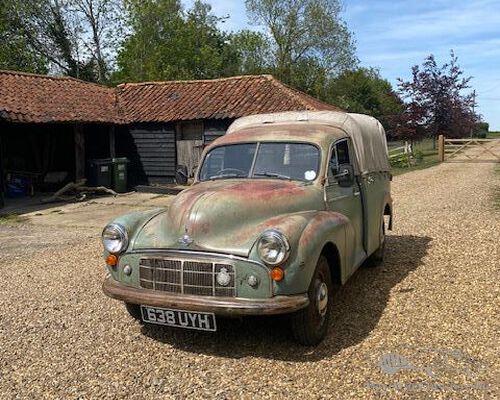

Rolls-Royce
Rolls-Royce Silver Wraightlinks gestuurd, automatic, stuurbekrachtigingkleur antraciet grijs, lopende auto op Nederlands kenteken
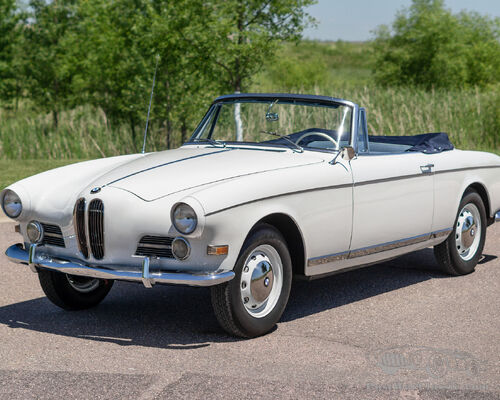
BMW 503 Cabriolet (V8) de 1957, 1 des 13 exemplaires construits pour le marché américain, exemplaire d'origine.
1957 BMW 503 Cabriolet Série 1 Moteur V8 en aluminium d'origine # correspondant Carrosserie en aluminium d'origine avec estampilles d'usine 1 des..