Le magazine et marché mondial pour les passionnés de voitures classiques, par des passionnés.





Les annonces; à vendre toutes voitures classique
Aperçu d’annonces associées à cette annonce 2002 Noble M12-GTO V6
-

1990 Mercedes-Benz 560 SEL | Historics Auctioneers
The Mercedes-Benz W126 model was the successor to the earlier W116 line and the second generation of the Mercedes-Benz flagship to officially bear the S-Class name meaning Sonderklasse or 'special class'. The model range also introduced many Mercedes-Benz safety innovations, including the first airbag (supplemental restraint systems), seatbelt pre-.. -
1997 Mercedes-Benz E220 Cabriolet | Historics Auctioneers
Mercedes-Benz introduced the 'E-Class' to the market in 1985 with the cabriolet version available from 1991. Much of the W124's engineering and many of its features were advanced automotive technology incorporating innovations that have been adopted throughout the industry. It had one of the lowest drag coefficients of any vehicle at the time, due .. -
2007 Smart Fortwo Convertible Brabus Red Edition | Historics Auctioneers
The Smart design concept began at Mercedes-Benz in the early 70s and late 80s. After brief backing by Volkswagen, the first model was released by Daimler-Benz in October 1998. Designed on the base of the Fortwo Brabus, this limited-edition example can be distinguished by its bright Intense Red colour and is powered by a 75bhp, three-cylinder turbo .. -
1986 Porsche 928 S2 | Historics Auctioneers
The Porsche 928 was a sports GT sold from 1978 to 1995 and originally intended to replace the iconic 911, the 928 attempted to combine the power, poise and handling of a sports car with the refinement, comfort and equipment of a luxury coupé creating, what some Porsche executives thought would be, a more appealing vehicle than the compact and quirk.. -
1986 Mercedes-Benz 500SL | Historics Auctioneers
The Mercedes-Benz SL-Class has been manufactured since 1954. The designation SL derives from the German 'Sport Leicht' or 'Sport Light' and was first applied to the 300SL 'Gullwing,' named after the upward-opening doors. The term SL-Class refers to the marketing variations of the vehicle, including the numerous engine configurations spanning five d.. -
2002 Mercedes-Benz SLK 230 | Historics Auctioneers
At the start of the 1990s, after the introduction of their two-seat, grand-tourer R129 SL and the Mazda MX-5, Mercedes-Benz set out to create a new compact roadster, slotted below the SL. By late 1991, under Bruno Sacco, the first design sketches were drawn, with scale models being built in the first half of 1992. Massively successful in its first .. -
1995 Mercedes-Benz E320 Sportline Cabriolet | Historics Auctioneers
Mercedes-Benz expanded the well regarded W124 E-Class range to include a stylish coupé version launched at the Geneva Motor Show in 1987, featuring a lower roofline and pillarless side treatment in the best Stuttgart coupé tradition. Built on a slightly reduced wheelbase, the interior was redesigned to accommodate four adults with individual rear s.. -
2005 Mercedes-Benz C55 AMG Estate | Historics Auctioneers
The C55 signified a return to AMG’s V8 roots, after barely a three-year flirtation with a supercharged V6. AMG found 8,100 homes for the C32, but the AMG engineers seemed much happier now that there was a serious, big capacity, naturally aspirated 5.4 litre V8 powering the meatiest C-Class and the badge is there to, well, to ensure the owners don’t.. -
2006 Hummer H2 Pick-up | Historics Auctioneers
The H2 is a Sport Utility Vehicle (SUV) from the General Motors Hummer division with production ceasing on this and all other Hummer models in 2010. This particular H2 is powered by the 6.0 litre, petrol engine which is mated to a four-speed automatic gearbox. The H2 usually only have five seats however this H2 has the benefit of the additional sea.. -
2002 Renault Avantime Privilege | Historics Auctioneers
Renault poured a staggering 1.4bn francs (€285m) into development of the world’s first MPV coupé following the reveal of the Concept in 1998 at the Paris Salon. Remarkably true to the original design, the 'Avantime', built by Matra, was a genuine mould-breaker that offered a luxurious cabin with ‘Theatre’ seating, pillarless side windows and a full..



En promo
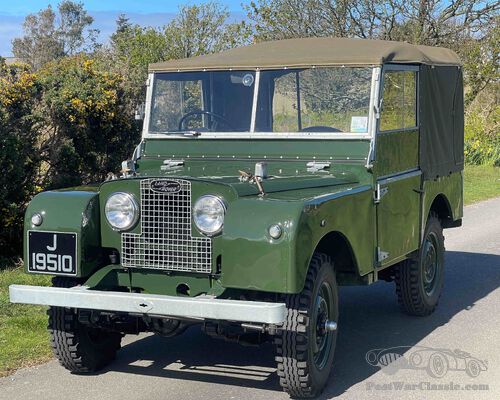
1952 Land Rover Series 1
Spécifications techniques :Marque et modèle : Land Rover Series !Année : 1952Plaque d'immatriculatio..
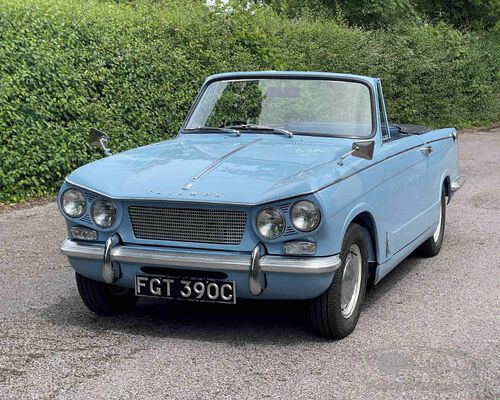
Triumph Vitesse 6 Convertible
Caractéristiques techniquesMarque et modèle : Triumph Vitesse 6 ConvertibleAnnée : 1965Immatriculation : Royaume-Uni
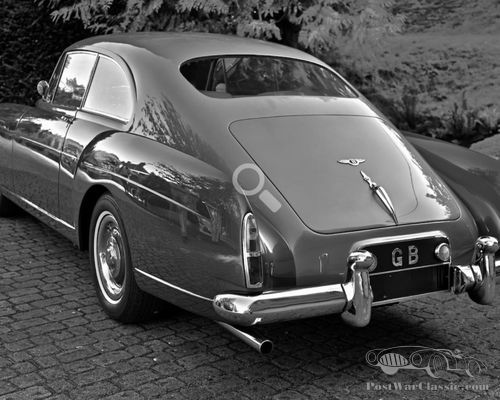
1957 Bentley S1 Fastback par H.J. Mulliner.
Bentley S1 Fastback by H.J. Mulliner – 1957.Exemplaire récemment restauré, primé à plusieurs concours, présenté dans un état proche du neuf...