Le magazine et marché mondial pour les passionnés de voitures classiques, par des passionnés.





Les annonces; à vendre toutes voitures classique
Aperçu d’annonces associées à cette annonce 1973 Jaguar V12 coupe, 2 + 2
-

1976 Lancia Fulvia 1.3S | Historic Auctioneers | Farnborough International | 11th May 2024
The Lancia Fulvia was introduced at the Geneva Motor Show in 1963 with production running all the way through to 1976. Fulvia’s are notable for their role in motor racing history, including winning the International Rally Championship in 1972. On testing it in 1967, Road and Track summed up the Fulvia as ‘a precision motorcar, an engineering tour d.. -
1971 Mercedes-Benz 230 SL Pagoda | Historic Auctioneers | Farnborough International | 11th May 2024
The Mercedes-Benz W113 roadsters, designed by Paul Bracq, were produced from 1963 through to 1971 and were known as the 'pagoda roof' SL. All models boast an inline six-cylinder engine with multi-port fuel injection. Rear-wheel drive configuration was complemented by independent rear suspension, a feature that greatly improved road handling. The 23.. -
1972 Ford Mustang Mach 1 351 Q-Code Ram Air Cobra Jet Fastback | Historic Auctioneers | Farnborough International | 11th May 2024
The Ford Mustang 351 Cobra Jet holds a special place in the 60 year history of the Ford Mustang. Introduced in 1969 as a high-performance option, with its sleek design and formidable power, the Mustang 351 Cobra Jet quickly gained a reputation as a street racer's dream. Underneath the bonnet laid a potent 351cui Cleveland V8 engine, tuned to delive.. -
1969 Jaguar E-Type Series II 2+2 Coupé (4.2 Litre) | Historic Auctioneers | Farnborough International | 11th May 2024
The Jaguar E-Type was initially designed and shown to the public as a grand tourer in two-seater coupé form and as a convertible roadster. Open headlights without glass covers, a wrap-around rear bumper, re-positioned and larger front indicators and taillights below the bumpers, better cooling aided by an enlarged 'mouth' and twin electric fans, to.. -
1968 Jaguar E-Type Series I 2+2 Coupé (4.2 litre) | Historic Auctioneers | Farnborough International | 11th May 2024
Introduced in 3.8 litre form in 1961, the Jaguar E-Type caused a sensation when it appeared with instantly classic lines and 150mph top speed. While, inevitably, the car's stupendous straight-line performance and gorgeous looks grabbed the headlines, there was a lot more to the E-Type beneath the skin. The newcomer's design owed much to that of the.. -
1960 Jaguar Mk. II (3.8 Litre) | Historic Auctioneers | Farnborough International | 11th May 2024
Synonymous with the swinging ‘60’s and the hit TV series, Inspector Morse, the Jaguar Mk. II Saloon has been used as a vehicle to transport everyone from dignitaries and politicians to bank robbers and the criminal select. Desirable due to being a well-balanced saloon car with space for four adults and a good size boot, it also boasted engine optio.. -
2004 Jaguar XJR | Historic Auctioneers | Farnborough International | 11th May 2024
The first XJ was launched in 1968 and the designation has been used for successive Jaguar flagship models since then. The original model was the last Jaguar saloon to have had the input of Sir William Lyons, the company's founder. A number of incarnations of this extremely robust and admired saloon appeared over the years finishing up in September .. -
1987 Jaguar XJS Coupé (5.3 Litre) | Historic Auctioneers | Farnborough International | 11th May 2024
The Jaguar XJS was a luxury grand tourer produced from 1975 through to 1996 and replaced the E-Type. Although it never had quite the same sporting image, the XJS was actually more aerodynamic with the last one being produced on 4th April 1996; at that stage 115,413 had been produced during a 21 year production life. Originally, power came from the .. -
1973 Triumph Stag | Historic Auctioneers | Farnborough International | 11th May 2024
Launched in 1970, the Triumph Stag was a luxury grand tourer. Envisioned as a luxury sports car, it was designed to compete directly with the Mercedes-Benz SL class models. All Stags were four-seater convertible coupés but for structural rigidity and to meet new American rollover standards at the time, the Stag required a B-pillar 'roll bar' hoop c.. -
1996 Jaguar XJS Celebration Convertible | Historic Auctioneers | Farnborough International | 11th May 2024
1975 saw the launch of the Jaguar XJS. In a year that Margaret Thatcher was made the leader of the Conservative Party and petrol was 70 pence per gallon, the new grand tourer from Jaguar was introduced as the replacement for the iconic E-Type. During an astonishing build run of 21 years, 115,413 units were produced by the Coventry manufacturer at t..


En promo
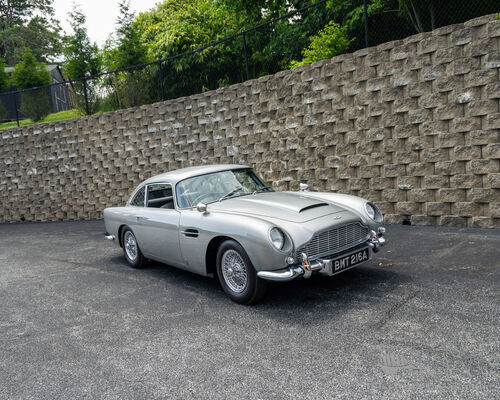
2020 Aston Martin DB5 Goldfinger Continuation
Proposée aux enchères par RM Sotheby's lors de The Monterey Auction, du 13 au 15 août 2026. Estimation : 1 000 000 à 1 500 000 USD
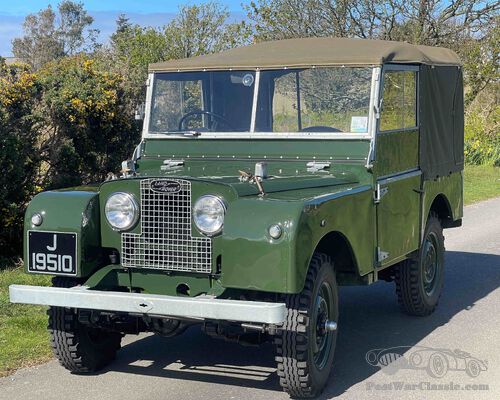
1952 Land Rover Series 1
Spécifications techniques :Marque et modèle : Land Rover Series !Année : 1952Plaque d'immatriculatio..
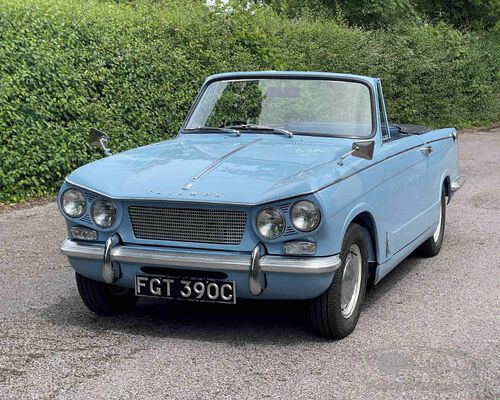
Triumph Vitesse 6 Convertible
Caractéristiques techniquesMarque et modèle : Triumph Vitesse 6 ConvertibleAnnée : 1965Immatriculation : Royaume-Uni