Le magazine et marché mondial pour les passionnés de voitures classiques, par des passionnés.




Les annonces; à vendre toutes voitures classique
Aperçu d’annonces associées à cette annonce 1971 Fiat 500L
-

1972 Mercedes-Benz 280 SE Coupé (3.5 Litre) | Historics Auctioneers
In the summer of 1965, Mercedes-Benz launched its new replacements for both W 111 and W 112 saloons, the W 108 and W 109 respectively. In a bizarre twist of fate, this car's design was based on the W 111 coupé but widened and squared off as the fintail fashion was quickly fading by the mid 1960s. However, both W 111 and W 112 models were modernised.. -
1974 BMW 2002Tii Cabriolet | Historics Auctioneers
BMW's director of product planning, Helmut Werner Bönsch and Alex von Falkenhausen, the designer of the BMW M10 engine, had both been owners of a 1600-2 (1602) and, subsequently, had both installed a two-litre engine in their respective cars. Following the realisation that they had both made the same modification, they prepared a joint proposal to .. -
1976 Lancia Fulvia 1.3S | Historics Auctioneers
The Lancia Fulvia was introduced at the Geneva Motor Show in 1963 with production running all the way through to 1976. Fulvia’s are notable for their role in motor racing history, including winning the International Rally Championship in 1972. On testing it in 1967, Road and Track summed up the Fulvia as ‘a precision motorcar, an engineering tour d.. -
1979 Jaguar SS100 by Suffolk Engineering | Historics Auctioneers
The SS100 was built between 1936 and 1940 by SS Cars Ltd of Coventry, England. The nomenclature was to reflect the theoretical 100mph maximum speed and once approved by Sir William Lyons, the name 'Jaguar' was given to a new saloon version in 1936. Widely considered to be one of the most aesthetically pleasing Jaguar cars ever built, it is also one.. -
1972 Jensen Interceptor Mk. III | Historics Auctioneers
Launched in 1966, the Jensen Interceptor broke away from the company's traditional method of construction that used glass reinforced plastic with the new car now incorporating an all steel bodyshell. Designed by Carrozzeria Touring, the early cars were built by Vignale before production was eventually carried out at the Jensen works in West Bromwic.. -
1972 Datsun 240Z | Historics Auctioneers
It soon became apparent during its creation, that the Datsun 240Z represented all the requirements of sports-minded drivers by fulfilling their desires for superb styling, power and safety whilst providing them with the most thrilling and enjoyable ride available in any car at that time. Reporting 151bhp and 146lb/ft of torque at just 4,400rpm, Car.. -
1977 Alfa Romeo 2000 Spider Veloce | Historics Auctioneers
The Alfa Romeo Spider was produced from 1966 to 1993 and is widely regarded as a design classic. It remained in production for almost three decades with only minor aesthetic and mechanical changes. The first presentation of the car, as a prototype, was at the Turin Motor Show in 1961; however, the continuing success of existing models and the econo.. -
1972 Alfa Romeo 1.3 GT Junior | Historics Auctioneers
Mention Alfa Romeos from the 1960s and 1970s and what usually springs to mind is the marque’s 105 Series Coupé, designed by Giorgetto Giugiaro of Bertone, considered to be one of his greatest designs. Not only as one of the best looking and handling classic saloon cars of the period, but the advanced specification, with its five-speed gearbox, all-.. -
1974 Reliant Scimitar GTE | Historics Auctioneers
The SE5 model of Reliant’s classic Scimitar came with the 3.0 litre Ford Essex engine providing a claimed top speed of over 120mph. A Borg-Warner automatic transmission was added as an option in 1970 and by 1971, overdrive on the four-speed manual was offered. In 1972 several improvements were included in the upgrade to SE5A, including a boost in p.. -
1972 Triumph TR6 | Historics Auctioneers
The Triumph TR6 was manufactured for seven years from 1969 and by the time production came to an end in July 1976, it was the best-seller of the TR range. The bodywork closely resembled that of the previous model, the Triumph TR5, but the front and rear were squared off and all TR6s featured inline six-cylinder engines. For the US market, the engin..




En promo
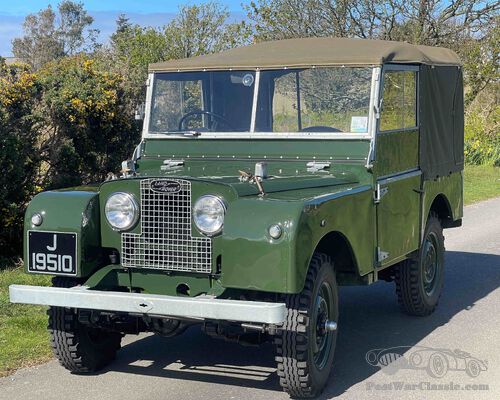
1952 Land Rover Series 1
Spécifications techniques :Marque et modèle : Land Rover Series !Année : 1952Plaque d'immatriculatio..
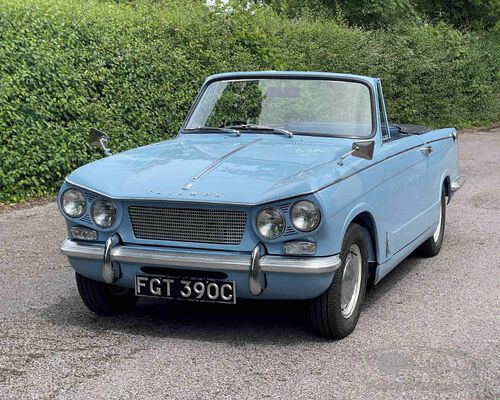
Triumph Vitesse 6 Convertible
Caractéristiques techniquesMarque et modèle : Triumph Vitesse 6 ConvertibleAnnée : 1965Immatriculation : Royaume-Uni
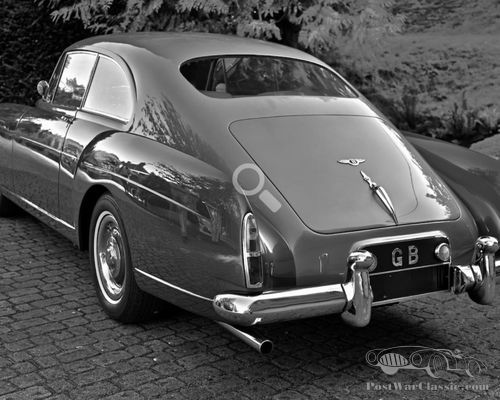
1957 Bentley S1 Fastback par H.J. Mulliner.
Bentley S1 Fastback by H.J. Mulliner – 1957.Exemplaire récemment restauré, primé à plusieurs concours, présenté dans un état proche du neuf...