Le magazine et marché mondial pour les passionnés de voitures classiques, par des passionnés.





Les annonces; à vendre toutes voitures classique
Aperçu d’annonces associées à cette annonce 2002 Jaguar X-TYPE 2.5 V6
-

1966 Jaguar S-Type (3.4 litre) | Historics Auctioneers
Produced from 1963 to 1968, the Jaguar S-Type was technically a more sophisticated development of the Jaguar Mk. II, offering buyers a more luxurious alternative. It was available with either 3.4 or 3.8 litre XK engines and featured longer rear bodywork among other styling and interior changes. Despite its extra weight, the S-Type's independent rea.. -
1983 Mercedes-Benz 380SL | Historics Auctioneers
Introduced in early 1971, this impressive two-seater sports car replaced the 280 SL. The body and chassis of the third generation SL was considerably heavier and longer than its predecessor but it still showed a resemblance. The standard transmission provided a top speed of 130mph and a very respectable 0-62mph in 8.8 seconds. As with the previous .. -
1972 Jaguar E-Type Series III Roadster | Historics Auctioneers
In March 2008, the Jaguar E-Type ranked first in the Daily Telegraph's list of the '100 most beautiful cars' of all time. It was initially designed and shown to the public as a grand tourer in two-seater coupé form and as convertible. The model was made in three distinct versions which are now generally referred to as 'Series I', 'Series II' and 'S.. -
1958 Jaguar Mk. I (3.4 litre) | Historics Auctioneers
Launched in 1955, the Mk. I extended Jaguar's domination of the high-performance car market in Britain, slotting neatly into the Coventry firm's range alongside the big Mk. VII M saloon and the XK140 sports car. The medium size newcomer broke new ground for Jaguar, being its first model to employ unitary construction of the chassis/body. Jaguar's e.. -
1990 Mini Mayfair | Historics Auctioneers
The Mini was a made by the British Motor Corporation (BMC) and its successors from 1959 until 2000. The original is considered a British icon of the 1960’s, and its space-saving front-wheel drive layout which allowed 80% of the car's floorpan to be used for passengers and luggage, influenced a generation of car makers. In 1999 the Mini was voted th.. -
1960 Jaguar Mk. II (3.8 litre) | Historics Auctioneers
Built between 1959 and 1967 the Jaguar Mk. II is a medium sized saloon car constructed in Coventry as the successor to the Jaguar 2.4 litre and 3.4 litre models manufactured between 1957 and 1959. These retrospectively became known as the Jaguar Mk. I following the release of the Mk. II in 1959. Adhering to Sir William Lyons' maxim of ‘grace, pace .. -
1959 Jaguar XK150 Drophead Coupé | Historics Auctioneers
Despite having a family resemblance to the XK120 and XK140, the XK150 was radically modernised. A one-piece windscreen replaced the split screen and the wing line no longer dropped as much over the doors. The bonnet was widened, opened down to the wings and on the roadster, the bulkhead was moved back four inches to make the bonnet longer. In the i.. -
1970 Jaguar E-Type Series II Coupé | Historics Auctioneers
From its launch in 1961 to the end of its production in 1975, the Jaguar E-Type went from design revelation to motoring icon in a generation. Based on Jaguar’s three time Le Mans winning D-Type and known internationally for its beautiful sleek lines and a top speed of 150mph, this revolutionary car had three significant series changes during its 14.. -
1984 Alfa Romeo Alfasud | Historics Auctioneers
When it went on sale in 1972, after first being launched the previous year at the Turin Motor Show, the Alfasud rewrote the book. Given that Alfa Romeo had no experience of small front-wheel drive cars, the sheer dynamic excellence of the flat-four powered Sud came as a shock, leaving the opposition grasping at straws in order to catch up. In 1976,.. -
1989 Toyota Supra Turbo | Historics Auctioneers
The initial four generations of the Supra were produced from 1978 to 2002. The fifth generation has been produced since March 2019 and went on sale in May 2019. The styling of the original Supra was derived from the Toyota Celica, but it was both longer and wider. Starting in mid 1986, the A70 Supra became a separate model from the Celica. In turn,..



En promo
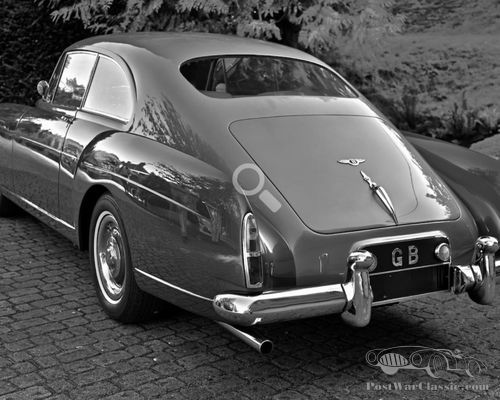
1957 Bentley S1 Fastback par H.J. Mulliner.
Bentley S1 Fastback by H.J. Mulliner – 1957.Exemplaire récemment restauré, primé à plusieurs concours, présenté dans un état proche du neuf...
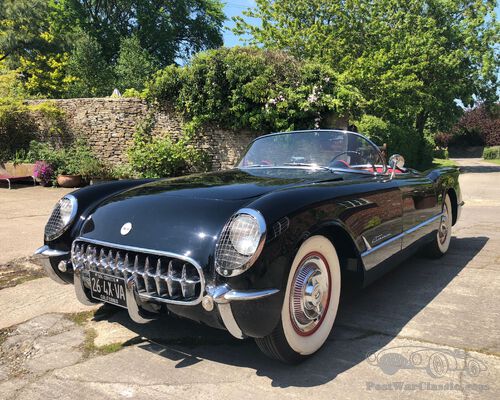
1954 Corvette C1
À la recherche de son prochain amour : mon élégante Corvette C1 de 1954. C’est une véritable sculpture. Jamais une voiture ne m’a valu autan..
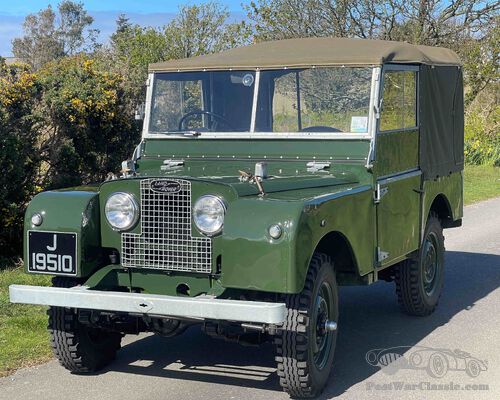
1952 Land Rover Series 1
Spécifications techniques :Marque et modèle : Land Rover Series !Année : 1952Plaque d'immatriculatio..