Le magazine et marché mondial pour les passionnés de voitures classiques, par des passionnés.





Les annonces; à vendre toutes voitures classique
Aperçu d’annonces associées à cette annonce 1972 Citroen DS 23 PALLAS
-

1982 Citroen 2CV Charleston | Selections from the Mullin Collection Auction | Gooding & Company | April 26, 2024
While initially introduced as a simplistic and utilitarian automobile, Citroën’s 2CV went on to outlive several of its intended successors and became fashionable among younger, especially under-35, buyers by the 1980s. Featuring Art Deco-inspired two-tone paint schemes, the 2CV Charleston was introduced in October 1980 and added to the Citroën m.. -
1966 Citroen 2CV Sahara | Selections from the Mullin Collection Auction | Gooding & Company | April 26, 2024
Having earned a near-mythical reputation for its ruggedness and ability to go virtually anywhere, these capabilities of the Citroën 2CV inspired the Sahara, a low-production, dual-engine 4x4 variant. Introduced for the 1958 model year, the Sahara was fitted with one 425 cc flat-twin engine placed up front driving the front wheels and another 425.. -
1973 Citroen HY78 Van | Selections from the Mullin Collection Auction | Gooding & Company | April 26, 2024
Always innovating and developing practical vehicles to suit the diverse needs of Europeans, Citroën developed and produced the first front-drive lightweight utility van prior to the outbreak of WWII in Europe. While only an estimated 2,000 examples were built, the TU-B inspired its postwar successor, the Type H, which debuted at the 1947 Paris M.. -
1967 Citroen ID21F Break | Selections from the Mullin Collection Auction | Gooding & Company | April 26, 2024
In addition to its groundbreaking design and engineering, based on that of the DS19, Citroën’s strong-selling ID19, and its variants, proved exceptionally adaptable and versatile. Introduced in 1958, the ID-based wagons saw production of nearly 94,000 examples, yet they are extremely rare in the US today. Simply known as the “Wagon” in North Ame.. -
1963 Citroen DS19 Concorde | Selections from the Mullin Collection Auction | Gooding & Company | April 26, 2024
Undoubtedly one of the most ambitious, influential, and distinctive postwar automobiles ever produced, the Citroën DS was styled by Flamino Bertoni, who also penned the groundbreaking prewar Citroën Traction Avant. The DS showcased a host of advanced features including front-wheel drive, self-leveling hydropneumatic independent suspension, high-.. -
1970 Citroen M35 Prototype | Selections from the Mullin Collection Auction | Gooding & Company | April 26, 2024
Following Citroën’s remarkable postwar successes with the 2CV, DS/ID 19 and 21, Ami 6, and Ami 8, company management decided to explore the possibilities afforded by the revolutionary Wankel rotary engine during the late 1960s. Based upon a heavily modified Ami 8 platform with distinctive hand-built bodywork by Heuliez, the M35 was powered by a .. -
1973 Citroen DS23 Prestige | Selections from the Mullin Collection Auction | Gooding & Company | April 26, 2024
While the top factory-available trim level for the Citroën DS was indeed the well-appointed Pallas, named after Greek goddess Pallas Athena, coachbuilder Henri Chapron offered the elite Prestige option, listed in the official Citroën model catalogue. Worthy of heads of state and the wealthiest personalities, the Chapron-upgraded DS was available.. -
1952 Citroen 2CV | Selections from the Mullin Collection Auction | Gooding & Company | April 26, 2024
When Citroën introduced the 2CV, short for Deux Chevaux (Two Horses) at the 1948 Paris Motor Show, few onlookers foresaw that this simple, inexpensive “people’s car” would see production of some 5,000,000 examples through 1990. Rooted in a 1936 brief issued by Citroën’s head of engineering and design, Pierre-Jules Boulanger, for the TPV.. -
1974 Citroen SM | Selections from the Mullin Collection Auction | Gooding & Company | April 26, 2024
From inception, France’s Citroën has been responsible for some of the most innovative and unique automobiles ever produced, from the front-drive Traction Avant originated during the 1930s to the advanced DS series and likely the marque’s finest, the SM (Série Maserati). Developed in the wake of the Citroën-Maserati merger in 1968, the SM feature.. -
1949 Citroen 15 Traction Avant Berline | Selections from the Mullin Collection Auction | Gooding & Company | April 26, 2024
In 1939, the 2.9-liter, six-cylinder 15 joined Citroën’s Traction Avant lineup as a “senior” model, sharing its basic styling and chassis with the 11B and differing in visual terms only with an elongated hood. In addition to its innovative front-wheel drivetrain layout, the 15 featured manual rack and pinion steering gear and hydraulic drum brak..



En promo
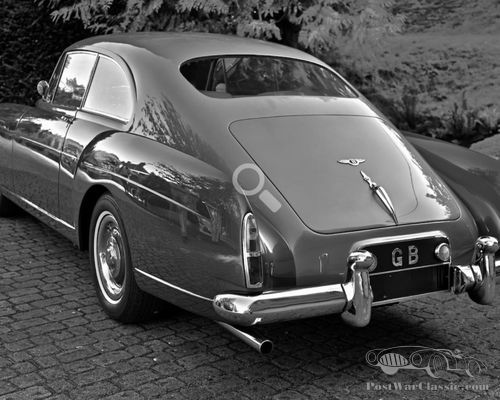
1957 Bentley S1 Fastback par H.J. Mulliner.
Bentley S1 Fastback by H.J. Mulliner – 1957.Exemplaire récemment restauré, primé à plusieurs concours, présenté dans un état proche du neuf...
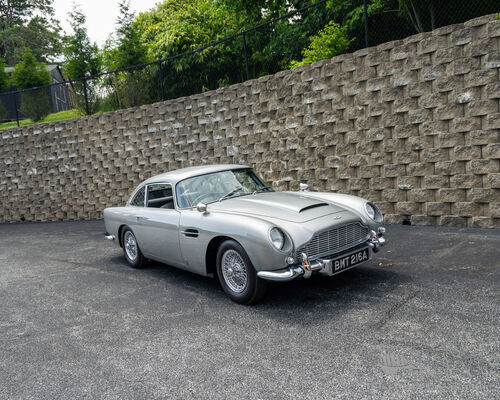
2020 Aston Martin DB5 Goldfinger Continuation | RM Sotheby's | The Monterey Auction
To Be OFFERED AT AUCTION at RM Sothebys' The Monterey Auction event, 13 - 15 August 2026. $1,000,000 - $1,500,000 USD One of 25 examples co..