Le magazine et marché mondial pour les passionnés de voitures classiques, par des passionnés.





Les annonces; à vendre toutes voitures classique
Aperçu d’annonces associées à cette annonce 1976 Alfa Romeo Sports Coupé par Autotecnica del Lario
-

1967 Corvette Stingray | Historics Auctioneers | 24th Sept 2022
The Corvette Stingray had grown to be America's most popular sports car since its debut in 1953 but it was time for a change for the 1963-1967 models. Even the most superlative design grows whiskers after a decade and Chevrolet chief, Bill Mitchell, and stylist, Larry Shinoda, faced a tough task; to improve a living legend. Not only did they succee.. -
1960 Jaguar Mk. II Saloon | Historics Auctioneers | 24th Sept 2022
The Jaguar Mk. II was a medium size saloon built from 1959 to 1967 as a successor to the 2.4 and 3.4 Mk. I models. The Mk. II was handsome, powerful and a good handling saloon which was offered with a choice of three six-cylinder, twin cam engines; 2.4 litre, 3.4 litre or 3.8 litre. After the appreciation of the MK. I, Jaguar's successor was well r.. -
1968 Jaguar XK120 by Aristocat | Historics Auctioneers | 24th Sept 2022
Built with Jaguar's written permission, the Aristocat uses all Jaguar components housed in a steel spaceframe chassis. For ease of build the Aristocat uses the XJ series suspension, un-modified, resulting in the car being five inches wider than the XK120 or XK140, but only one inch wider than the XK150. The additional width, added down the centre o.. -
1966 Mercedes-Benz 230 SL Pagoda | Historics Auctioneers | 24th Sept 2022
The Mercedes-Benz W113 roadsters, designed by Paul Bracq, were produced from 1963 through to 1971 with their distinctive 'Pagoda' hardtop roof giving them their contemporary nickname. All models feature an inline six-cylinder engine with multi-port fuel injection using a mechanical pump system adapted from the diesel engine. All are rear-wheel driv.. -
1966 Triumph TR4A IRS 'Surrey Top' | Historics Auctioneers | 24th Sept 2022
Produced between 1961 and 1967, the Triumph TR4 combined a new, modern, and aggressive body design by famed Italian stylist Giovanni Michelotti, with the basic chassis of the previous TR3A. The TR4 also improved passenger comfort with wind-up windows, face-level ventilation, and an optional hardtop. When equipped with the optional overdrive, the TR.. -
1961 Jaguar E-Type Bonnet | Historics Auctioneers | 24th Sept 2022
An original and unused Jaguar E-type Series I bonnet, still in the factory primer. -
1961 Jaguar E-Type Series I Roadster (Flat floor) | Historics Auctioneers | 24th Sept 2022
Launched at the 1961 Geneva Motor Show, the Jaguar E-Type was nothing short of a revelation. With its heady blend of supercar performance, breathtaking styling and low price tag, the newcomer left rivals reeling and customers clamoring. While early sports car racing success at the hands of Graham Hill and Roy Salvadori amongst others helped cement .. -
1969 Porsche 911E FIA Race Car | Historics Auctioneers | 24th Sept 2022
The original 911 series is often cited as the most successful competition car ever, especially when its variations are included; namely the powerful 911 derived 935 which won Le Mans as well as other major sports cars races. The original Porsche 911 with its famous and distinctive design was mechanically notable for being rear-engine and air-cooled.. -
1966 Ford Mustang FIA ‘Notchback’ | Historics Auctioneers | 24th Sept 2022
UK saloon racing in the 1960s was epitomised by the battles between the American V8s and the British Lotus Ford Cortinas and Austin Coopers of the day. They were driven, in the British Saloon Car Championship (pre-BTCC), by current Grand-Prix stars such as Jim Clark, Jack Brabham and Graham Hill, as well as saloon car specialists like Frank Gardene.. -
1966 Ford Thunderbird Convertible | Historics Auctioneers | 24th Sept 2022
The Thunderbird entered production in 1955 as a sporty, two-seat convertible and, unlike the Chevrolet Corvette, was not marketed as a sports car. Instead, Ford created a new market segment, the Personal Car. Ford has since produced over 4.4 million Thunderbirds. The second to fourth generation Thunderbird convertibles were similar in design to the..


En promo
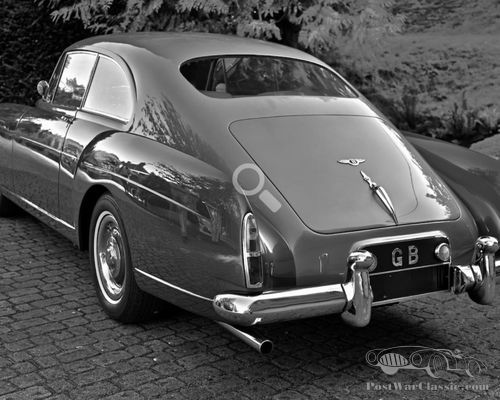
1957 Bentley S1 Fastback par H.J. Mulliner.
Bentley S1 Fastback by H.J. Mulliner – 1957.Exemplaire récemment restauré, primé à plusieurs concours, présenté dans un état proche du neuf...
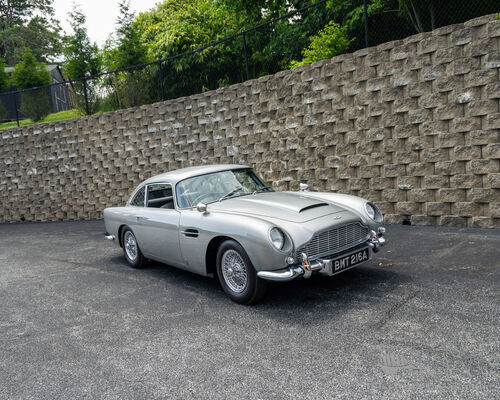
2020 Aston Martin DB5 Goldfinger Continuation | RM Sotheby's | The Monterey Auction
To Be OFFERED AT AUCTION at RM Sothebys' The Monterey Auction event, 13 - 15 August 2026. $1,000,000 - $1,500,000 USD One of 25 examples co..