Le magazine et marché mondial pour les passionnés de voitures classiques, par des passionnés.





Les annonces; à vendre toutes voitures classique
Aperçu d’annonces associées à cette annonce 2024 Land Rover RANGE ROVER 4.4 V8 AUTOBIOGRAPHY
-

2004 Ferrari 360 Challenge Stradale | Amelia Island 2022 | Gooding & Co | March 4
Ferrari unveiled the 360 in 1999 to replace the outgoing F355. Hidden beneath a gorgeous new Pininfarina body was a faster, tighter, better-handling package based on a new, lighter aluminum space frame, developed in concert with Alcoa. In 2003, Ferrari introduced the 360 Challenge Stradale which was a lighter, more purpose-built version.. -
2000 Ferrari 550 Maranello | Amelia Island 2022 | Gooding & Co | March 4
The Ferrari 550 Maranello was unveiled at the Nürburgring in July 1996 and, following 23 years of mid-engine architecture, it marked the fabled automaker’s triumphant return to a front engine, rear drive configuration. The striking new V-12 grand tourer was an unambiguous departure from its predecessor the Testarossa – its lithe new Pininfarina.. -
1991 Ferrari F40 | Amelia Island 2022 | Gooding & Co | March 4
The final project personally overseen by Enzo Ferrari, the F40 was a celebration of the marque’s 40th anniversary as a motorcar manufacturer. While heavily influenced by the 288 GTO Evoluzione developed for FIA Group B motor sports competition, the F40 was never conceived for life on a circuit or racetrack, but instead simply intended to be the .. -
2002 BMW Z8 | Amelia Island 2022 | Gooding & Co | March 4
Designed as an homage to the BMW 507, the Z8 is the limited-production model based on the Z07 concept. Behind the iconic design were famed designers Henrik Fisker, Chris Bangle, and Scott Lempert. The finished product was recognized as a modern interpretation of iconic cars from the 1950s and 1960s. Its stunning design even landed it a feature i.. -
2001 Porsche 996 GT2 | Amelia Island 2022 | Gooding & Co | March 4
Setting the bar for hardcore road-going 911s, the GT2 was brought back for the 2001 model year during the 996 series, Porsche’s first water-cooled generation for the 911. During its first year, the 996 GT2 was not offered in the US, making this example a rare sight on these shores. Rarity, however, was not the only name of the game for .. -
2018 Porsche 911 GT3 Touring | Amelia Island 2022 | Gooding & Co | March 4
In Fall 2017, Porsche introduced the Touring Package for the track-oriented 911 GT3 model, a no-cost option that eliminated the GT3’s large rear wing and replaced it with the motorized rear spoiler from the 911 Carrera GTS, lending the car a more understated appearance. The GT3 Touring retained the GT3’s sensational motor sports-derived, 9,000 r.. -
2013 Aston Martin V8 Vantage Coupe | Amelia Island 2022 | Gooding & Co | March 4
The Vantage moniker dates back to the early 1950s with the DB2 Vantage. Aston Martin continued to use it throughout the decades on many “DB” cars, until 1976, when the Vantage name moved to the V8. When it was introduced, the V8 Vantage had the fastest 0–60 time of any production car, at 5.3 seconds. Phased out for the 1989 model year, another V.. -
1991 BMW 318is | Amelia Island 2022 | Gooding & Co | March 4
Introduced for the 1984 model year, the E30 was BMW’s newest entry into the small executive coupe and sedan class that originated in the 1960s with the 02 series. The E30 offered everything that one could want from a German car in the 1980s – solid build quality, Teutonic styling, and an incredible driving experience. One of the most un.. -
2001 BMW M3 | Amelia Island 2022 | Gooding & Co | March 4
With its two previous generations, based on the E30 and E36 platforms, firmly cemented as performance legends, BMW introduced a new M3 to the public for the 2001 model year. Based on the advanced E46 architecture introduced in 1997, the new M3 was a great leap forward in terms of outright performance, mostly stemming from the new S54 straight-si.. -
2013 BMW M3 Lime Rock Park Edition | Amelia Island 2022 | Gooding & Co | March 4
During development of the E90/92 variant of the M3, BMW’s Motorsport department weighed its options for a powertrain. It was necessary for the new car to have markedly higher power output than the outgoing E46 model, but without sacrificing weight. It landed on designing an all-new aluminum V-8 displacing four litres and producing 414 hp while r..



En promo
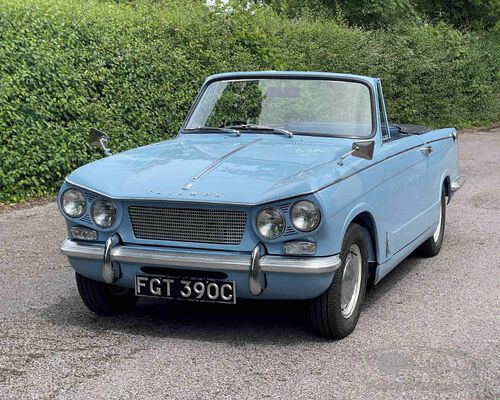
Triumph Vitesse 6 Convertible
Caractéristiques techniquesMarque et modèle : Triumph Vitesse 6 ConvertibleAnnée : 1965Immatriculation : Royaume-Uni
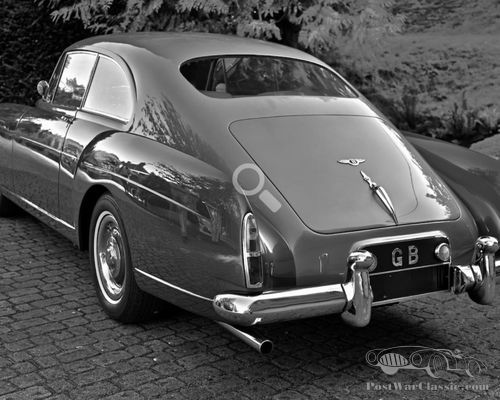
1957 Bentley S1 Fastback par H.J. Mulliner.
Bentley S1 Fastback by H.J. Mulliner – 1957.Exemplaire récemment restauré, primé à plusieurs concours, présenté dans un état proche du neuf...
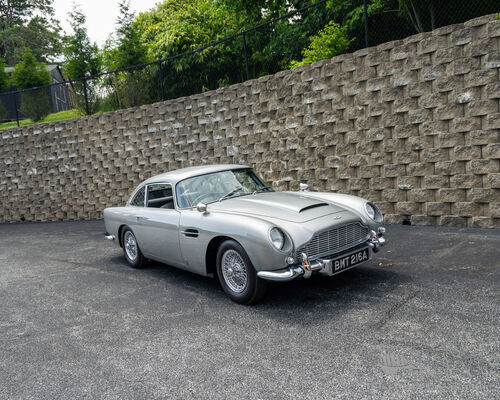
2020 Aston Martin DB5 Goldfinger Continuation
Proposée aux enchères par RM Sotheby's lors de The Monterey Auction, du 13 au 15 août 2026. Estimation : 1 000 000 à 1 500 000 USD