Le magazine et marché mondial pour les passionnés de voitures classiques, par des passionnés.
Le magazine et marché mondial pour les passionnés de voitures classiques, par des passionnés.


Faites votre choix:
- Voir les voitures
-
Marque >>
-
Année >>
-
-
Catégorie >>
- Voir les motos
-
Année >>
-
- Voir les pièces et plus
-
Marque de la voiture >>
-
Constructeur >>
-
Catégorie >>
-
Pays



Les annonces; à vendre toutes voitures classique
Aperçu d’annonces associées à cette annonce
-

1947 Chrysler Windsor Highlander Convertible | Audrain Concours Auction | Bonhams
250ci Flathead Inline 6-Cylinder Engine Single 1-bbl Carburetor 114bhp at 3,600rpm 2-speed Semi-automatic "Fluid Drive" Transmission Independent Front Suspension, Live Rear Axle Hydraulic Drum Brakes *Two claimed owners from new *Very low indicated mileage *An older restoration, in excellent driver condition *Great color combination ..1947ChryslerWindsor Highlander ConvertibleVENDU -
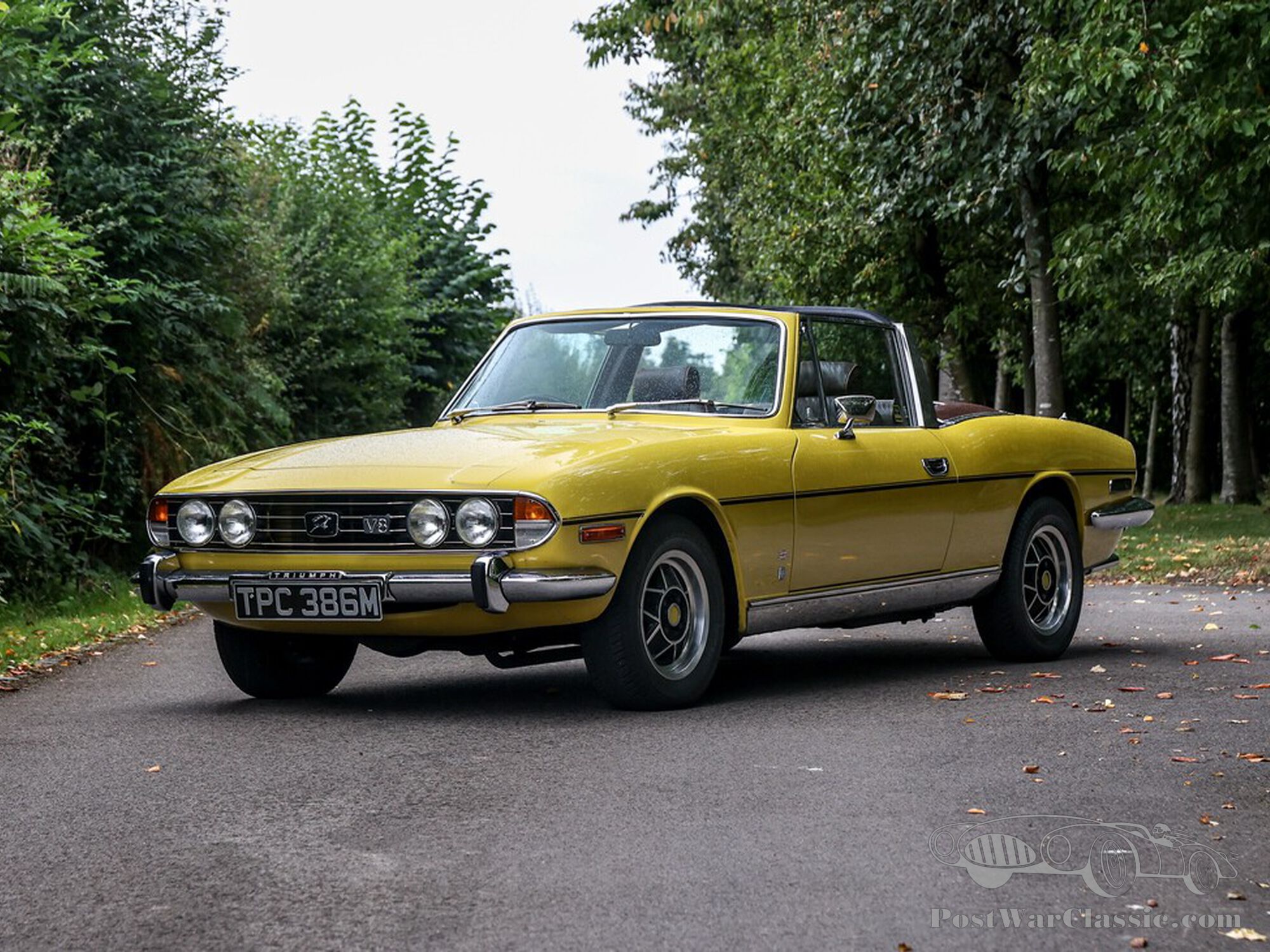
1973 Triumph Stag | Bicester Heritage 23rd September 2023 Sale | Historics Auctioneers
Like the Triumph 2000 it was developed from, the Stag was styled by Italian maestro Giovanni Michelotti and featured the monocoque construction, independent suspension, disc/drum brakes, power-assisted rack and pinion steering and driveline of that saloon. The powerplant, though, was an all-new OHC, V8 of 3000cc capacity fed by a pair of Stromberg ..1973TriumphStagVENDU -
1960 Triumph TR3A | Bicester Heritage 23rd September 2023 Sale | Historics Auctioneers
The Triumph TR3 was built between 1955 and 1962 and was usually supplied as an open two-seater, although an occasional rear seat and bolt-on steel hardtop were available as extras. It was powered by a 1991cc engine which initially produced 95bhp increasing to 100bhp at 5000rpm. The four-speed manual transmission could be supplemented by an overdriv..1960TriumphTR3AVENDU -
1962 Triumph TR4 | Bicester Heritage 23rd September 2023 Sale | Historics Auctioneers
The Triumph TR4 is a sports car built by Standard Triumph Motor Company and introduced in 1961. Code named ‘Zest’ during development, the car was based on the chassis and drivetrain of the previous TR sports cars but with a modern Michelotti styled body. A total of 40,253 cars were built; the TR4 proved very successful and continued the rugged imag..1962TriumphTR4VENDU -
1968 Triumph TR5 | Bicester Heritage 23rd September 2023 Sale | Historics Auctioneers
The Triumph TR5 was manufactured for just 13 months, from August 1967 through to September 1968 and is the most sought after of the Michelotti /Karmann-styled Triumph sports roadsters, combining the most elegant early looks with all-independent suspension and the best engine. Optional extras included overdrive, wire wheels and the Surrey top with d..1968TriumphTR5VENDU -
1968 Triumph TR5 | Bicester Heritage 23rd September 2023 Sale | Historics Auctioneers
The 1968 Triumph TR5 is an iconic British sports car that seamlessly blends timeless design with exhilarating performance. Powered by a 2.5 litre inline-six engine, it delivers 150 horsepower, offering a thrilling driving experience. Its distinctive Michelotti-penned bodywork features flowing lines and a classic British roadster profile, capturing ..1968TriumphTR5VENDU -
1949 Bedford O.B. Duple Coach | Bicester Heritage 23rd September 2023 Sale | Historics Auctioneers
Rationalising its manufacturing, General Motors moved production of Chevrolet commercial vehicles to its Vauxhall car plant at Luton, from whence a redesigned range of 'Bedford' branded commercials emerged in 1931. In 1939, Bedford introduced the 'K' series which, in common with passenger cars of the time, was more curvaceously styled and featured ..1949BedfordO.B. Duple CoachVENDU -
1969 Triumph TR6 | Bicester Heritage 23rd September 2023 Sale | Historics Auctioneers
The Triumph TR6 was produced between 1969 and 1976 and, by the time production ended in July 1976, it was the best-seller of the TR range. In total 94,619 TR6s were manufactured of which 86,249 were sold overseas and only 8,370 were sold in the UK. The bodywork closely resembled that of the previous model, the TR5, but the front and rear were squar..1969TriumphTR6VENDU -
1968 Triumph TR5 | Bicester Heritage 23rd September 2023 Sale | Historics Auctioneers
The TR5 was built for a 13-month period between August 1967 and September 1968 in Coventry. Visually identical to the Michelotti styled TR4, the TR5 hid the main differences under the body. The most significant change was the 2.5 litre straight-six fuel-injected engine developing around 150bhp and which was carried forward to the TR6. At the time, ..1968TriumphTR5VENDU -
1967 Triumph TR4A IRS | Bicester Heritage 23rd September 2023 Sale | Historics Auctioneers
Produced between 1961 and 1967, the Triumph TR4 combined a new, modern, and aggressive body design by famed Italian stylist, Giovanni Michelotti, with the basic chassis of the previous TR3A. The TR4 also improved passenger comfort with wind-up windows, face-level ventilation, and an optional hardtop. When equipped with the optional overdrive, the T..1967TriumphTR4A IRSVENDU



En promo
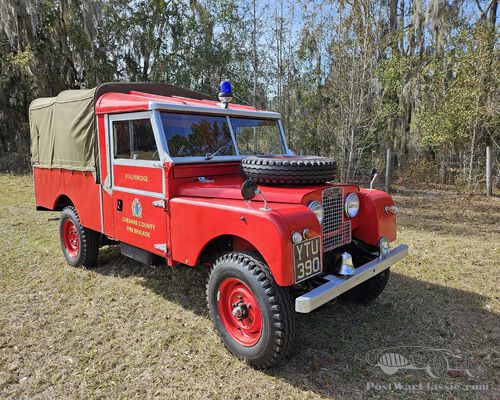
1957 Series 1 Land Rover Fire Engine + Coventry Climax Godiva Fire Pump
Betsy was used by Cheshire Fire Service (UK) from 1957 to 1975. She was based at Hazel Grove and Stalybridge Fire stations. She comes with an exten..
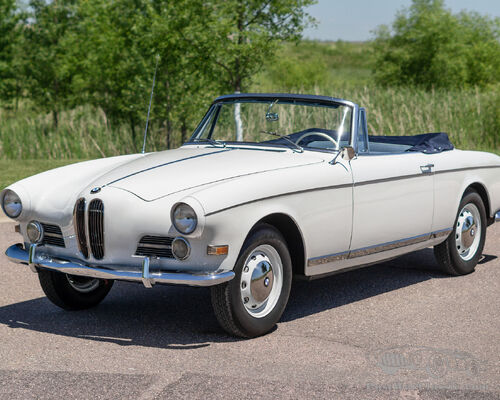
BMW 503 Cabriolet (V8) de 1957, 1 des 13 exemplaires construits pour le marché américain, exemplaire d'origine.
1957 BMW 503 Cabriolet Série 1 Moteur V8 en aluminium d'origine # correspondant Carrosserie en aluminium d'origine avec estampilles d'usine 1 des..