Le magazine et marché mondial pour les passionnés de voitures classiques, par des passionnés.





Les annonces; à vendre toutes voitures classique
Aperçu d’annonces associées à cette annonce 1971 Ferrari Dino 246 GT by Scaglietti | RM Sotheby's | The Woodcote Park Auction
-

1975 Triumph Stag | Historics Auctioneers
The ‘Stag’ name was a development codename allocated when the design project was initiated by Giovanni Michelotti in 1965. None of the subsequent names suggested through the process were ever deemed more compelling, 55 years later, the Triumph Stag still occupies one of the cornerstones of the collector’s car market. The svelte Michelotti styling m.. -
1971 Mercedes-Benz 230 SL Pagoda | Historics Auctioneers
The Mercedes-Benz W113 roadsters, designed by Paul Bracq, were produced from 1963 through to 1971 and were known as the 'pagoda roof' SL. All models boast an inline six-cylinder engine with multi-port fuel injection. Rear-wheel drive configuration was complemented by independent rear suspension, a feature that greatly improved road handling. The 23.. -
1972 Triumph TR6 | Historics Auctioneers
The Triumph TR6 was manufactured for seven years from 1969 and by the time production came to an end in July 1976, it was the best-seller of the TR range. The bodywork closely resembled that of the previous model, the Triumph TR5, but the front and rear were squared off and all TR6s featured inline six-cylinder engines. For the US market, the engin.. -
1975 MG B GT | Historics Auctioneers
The fixed-roof MGB GT was introduced in October 1965. Production continued until 1980, although export to the U.S. ceased in 1974. The MGB GT sported a ground-breaking greenhouse designed by Pininfarina and launched the sporty 'hatchback' style. By combining the sloping rear window with the rear deck lid, the B GT offered the utility of a station w.. -
1972 Mercedes-Benz 350SL | Historics Auctioneers
The Mercedes R107 was launched in 1971 and production continued through to 1989 - a hefty 18 years; the longest single series ever produced by the firm besides the G-Class utility vehicle. The R107 replaced the W113 Pagoda SL in 1972 and was replaced by the R29 SL in 1989. Some 237,000 R107 SL's were built and about two thirds were sold in the U.S... -
1973 BMW 3.0 CSi | Historics Auctioneers
In 1968, BMW introduced a new two-door coupé that was designed and built by Karman. This new model was named internally as the E9 and the first version produced was named the 2800 CS, it featured an increased wheelbase to accommodate a new straight-six engine. The front of the car was restyled to resemble the E3 saloon model otherwise known as t.. -
1977 Morgan Plus 8 | Historics Auctioneers
Introduced in 1968, the Plus 8 became such an instant hit and enduring success that it not only provided the bedrock on which Morgan could build for the future, but quite possibly saved the company at a difficult time in its long history. Searching for new engines, Morgan concluded a deal with Rover for supply of its all aluminium 3.5 litre V8, thu.. -
1971 Marcos GT 3000 | Historics Auctioneers
Marcos was founded in 1959 by Jem Marsh and Frank Costin, in 1961 Costin left Marcos and Denis Adams took over as stylist working with his carpenter brother Peter. The cars were a big hit with the in crowd during the 60s and 70s with the likes of film director Sam Wanamaker, Rod Stewart and many other celebrity's enjoying ownership. The Marcos evol.. -
1991 Ferrari 348 TS | Historics Auctioneers
The Ferrari 348 was a mid-engined, rear wheel drive V8 powered two-seater replacing the 328 in 1989 and continuing until 1995. Badged 348 TB for the coupé (Berlinetta) and 348 TS (Spider) for the targa versions, it features a naturally aspirated 3.4 litre version of the quad-cam, four valve per cylinder engine which was originally found in the 288G.. -
1979 Aston Martin V8 Series 4 Oscar India | Historics Auctioneers
Aston Martin's customers had been clamouring for an eight-cylinder car for years, so Aston Martin designed a larger two-door saloon for V8 applications. The engine was not ready, however, so in 1967 the company released the DBS with the straight-six Vantage engine from the DB6. Two years later, Tadek Marek's V8 was ready, and Aston released the DBS..


En promo
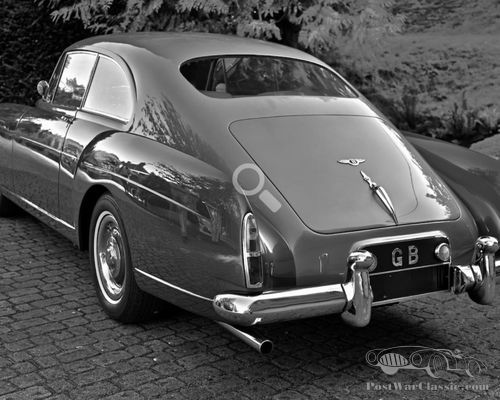
1957 Bentley S1 Fastback par H.J. Mulliner.
Bentley S1 Fastback by H.J. Mulliner – 1957.Exemplaire récemment restauré, primé à plusieurs concours, présenté dans un état proche du neuf...
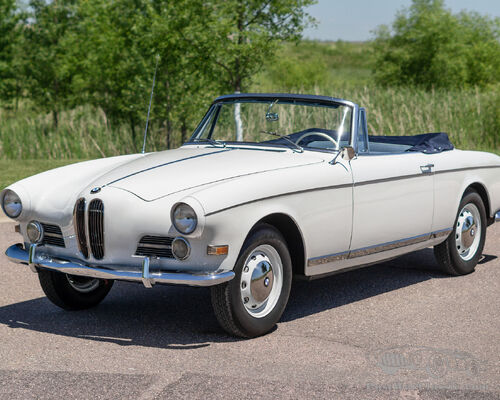
BMW 503 Cabriolet (V8) de 1957
BMW 503 Cabriolet Série 1 – 1957Moteur V8 en aluminium d’origine, avec numéros concordants (Matching Numbers)Carrosserie d’ori..
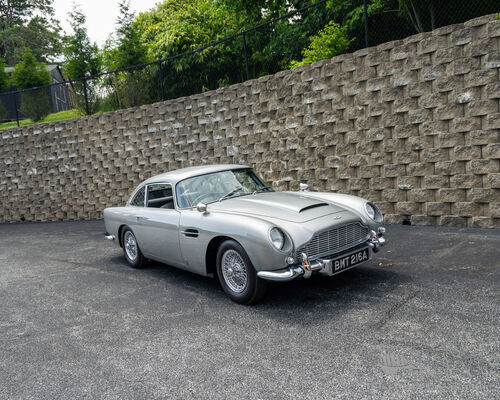
2020 Aston Martin DB5 Goldfinger Continuation | RM Sotheby's | The Monterey Auction
To Be OFFERED AT AUCTION at RM Sothebys' The Monterey Auction event, 13 - 15 August 2026. $1,000,000 - $1,500,000 USD One of 25 examples co..